Saturday, December 22, 2012

Esna & Edfu – December 2010


Esna – The Temple of Khnum
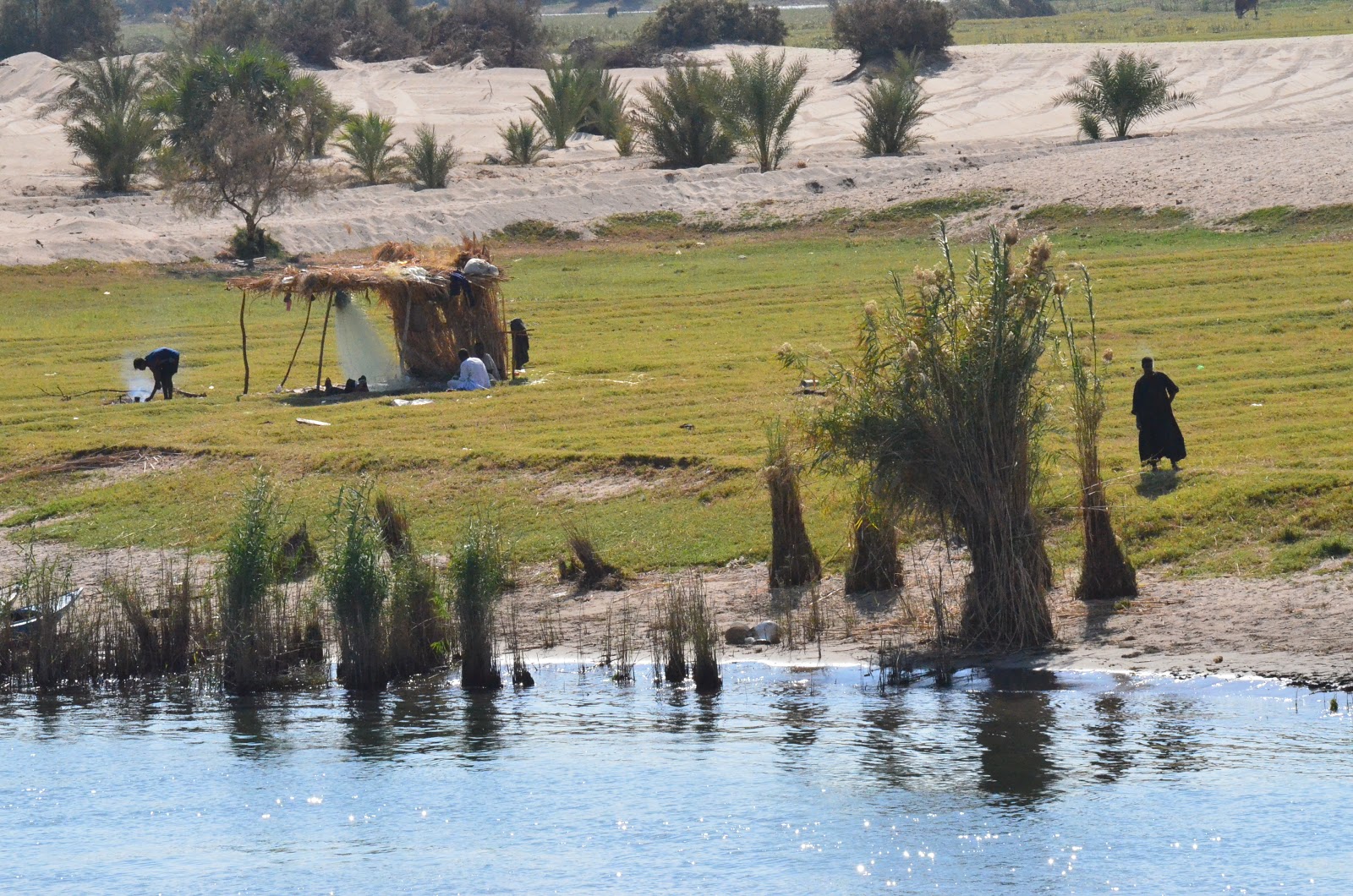
On this leg of the journey we were able to view rural life in Egypt.  Rural life in Egypt is interesting because very little has changed in 4,000 years yet you still see signs of modern life in the villages and towns.  In the town of Esna, located on the western bank of the Nile, we were able to see farmers bring their goods to town on horse and cart buggies.  It was remarkable how these farmers traveled on the same roads as the big tourist buses.  While in Esna we visited the Temple of Khnum, a Greco-Roman structure.  Over thousands of years this area was buried with silt and mud from Nile flooding.  The modern town of Esna was built on top of these ruins.  They began excavating the area in the 1860s.  So far they have only cleared one part of the temple and it is still a work in progress.  


Edfu – The Temple of Horus
This is the temple where Horus, the falcon god, fought a battle with his uncle Seth after he murdered Osiris, Horus’s father.  

On this day of the trip I got really sick.  I had been feeling sick for a few days and it was getting worse.  I could feel a respiratory infection developing.  At breakfast my friends traveling with me all offered me medicine from their traveling emergency kits to make me feel better.  I ended up trying zinc tablets first in the form of some zinc cough drops.  Then about an hour later my friends offered me some antibiotics.  I knew it was getting bad so I took the antibiotics and then I was out the door on the way to my next adventure at The Temple of Horus.  

As we stood listening to our tour guide’s lesson about the temple I started to feel very sick.  I was nauseous and my mouth was watering terribly.  I was starting to panic.  How could I be sick here?  My skin started to hurt and I could feel the fever, which made me feel worse since it was already very warm out.  Finally I couldn’t hold it anymore and I went and vomited in the corner of temple grounds.  I was mortified!!!  I looked around and no one saw that I was sick, I had wandered to a spot where the group couldn’t see me.  I watered down the area with my bottled water and I went back to the group.  When I walked back to the group I saw my friend Bridget staring at me.  I thought for sure she knew and I was really embarrassed.  I drank a lot of water as I stood there listening to my tour guide and my stomach started to feel better, but I still felt like I had a horrible respiratory infection and I was weak.  When we entered the temple there was an area you could sit and wait.  So I sat while the group continued on.  When my friends came back they were surprised I hadn’t gone on the tour because they didn’t know I was sick.  Then I felt even more embarrassed because I had to tell them how I’ve joined the club of horrible American tourists who act inappropriately while visiting foreign lands, yep I upchucked at a sacred ancient temple.  Bucket list – check.
We all joked after the tour that I was so sick I was turning blue.0
My hands were just blue from some paper I was holding.


After the tour was done we took a break and returned to the Nile cruise ship, or the ship of death as I thought of it.  I felt like the boat was trying to kill me, with the tainted food, bad air, and dirty water everywhere I looked I thought for sure the boat would be the end of me.  I still wasn’t feeling well so I took the afternoon off from touring to nap and spend quiet time in my room.  While in my room I used my iPhone to Google the antibiotic I took that morning as well as my symptoms to see if I could figure out how to medicate myself.  I found out the reason I was so sick was because I was having a reaction between the zinc, the antibiotic and all the orange juice I had drank that morning.  Turns out the acid is a big problem when mixing those ingredients and that is what made me sick at the temple.  So I decided to get some rest and if I felt sick the next day I would ask the tour guide to take me to a pharmacy or call a doctor so I could get some antibiotics.

Sunday, October 21, 2012

Hatshepsut's Mortuary Temple – December 2010


Located on the west bank of the Nile, across from Luxor we discovered Deir El Bahari mortuary temple of Queen Hatshepsut.  The temple is partly built out of the rock wall and partly free standing.  It is built into a Limestone cliff which adds to the dramatic look of the landscape.

The temple was cut into the cliff so it is very impressive.  The main focal point is the Deir El Bahari mortuary temple of Hatshepsut.  As you walk up the ramp towards the pillars of the temple you feel smaller and smaller and realize what an architectural masterpiece you’ve discovered. I can’t imagine how impressive it was in 2050 B.C. when it had gardens and lived in all its glory.  These days the rebuilt statues are there but most of the originals have gone missing.  After the pharaoh died several parts of the monument were destroyed including a statue of Osiris, the sphinx avenue that was in front of the monument, and figures of Hatshepsut were all destroyed.

As I walked around exploring the mortuary temple I felt a little spooked like something bad had happened there. It was the weirdest thing because I don’t usually get spooked like that. I just had a weird feeling and an uneasiness about the place.

Osiris statues of Hatshepsut show her
posing as a man wearing a beard

After our tour we sat in the café at the base of the temple and had ice cream and drinks. One of the other guys in our group asked me if I was familiar with the Luxor Massacre.  I had no idea what he was talking about.  He said that there was a terrorist attack at the site in the 90s. It tripped me out a bit because I could imagine what that was like and it gave me visions in my mind and goose bumps on my arms. My curiosity got hold of me so when we returned to the boat I had some time to myself so I Googled Luxor Massacre on my iPhone. 

I learned that back in 1997 on November 17th there was a terrorist attack at the site we visited.  63 people were killed by Islamist terrorists.  Four Egyptians were killed (3 police officers and a tour guide), 36 Swiss nationals, 10 Japanese, 6 from Britain, 4 from Germany, 1 French, and 2 people from Colombia were also murdered.   There were six assailants armed with automatic weapons and knives.  They were dressed as members of the security forces and were in disguise.  According to witnesses the tourists were trapped inside the temple and the terrorists attacked for 45 minutes killing as many people as possible.  The attack was gruesome and included the assailants using machetes to mutilate the victims, especially women.  It was so gruesome they found a note praising Islam inside one of the butchered bodies.  After the attack the assailants hijacked a bus and then crashed into a checkpoint during a shootout with police.  One terrorist was killed at the checkpoint while the others fled into the mountainside.  Their bodies were found later in a cave after they all committed suicide together.     

The terrorist attack hurt Egyptian tourism for years and was still felt in 2010 when I visited because other tourists were discussing the attack and aware of the danger when we were chatting in the cafe. The terrorists were anti-government and wanted the attack to devastate the economy and provoke the government. The attack did the opposite and caused an internal rift among the militants and resulted in a ceasefire. It also turned the Egyptian public opinion against the terrorists. The local people protested against the group. The leader of Islamic Group claimed they only meant to take the tourists hostage not murder them. Others denied Islamists had anything to do with the attack and some people even blamed Israelis and Egyptian Police for the attack.
 
It was interesting visiting a place with so much history and not realizing that some of the notorious events were so recent. Hatshepsut’s Mortuary Temple was a beautiful sight but it had a creepy feeling to me when I visited. I think it is worth knowing the ancient and modern history because it helped me explain the uneasiness I felt when visiting.  

Holy Cow Hator

Tuesday, April 24, 2012

Valley of the Kings - December 2010

After breakfast with our tour group on the cruise ship we got on a bus and headed to the West Bank of the Nile and the Valley of the Kings.
 

The Valley of the Kings is home to 65 Egyptian tombs that belonged to Pharaohs.  The royal tombs were built into the side of the limestone hills of the mountains and carved out of sheer rock.  The tombs were built deep into the hills so they would discourage tomb robbers from stealing the possessions buried with the pharaohs.  Unfortunately all of the tombs were robbed except for two or three tombs.  One of the tombs left untouched was King Tutankhamun’s tomb which is why today we are able to see so many magnificent ancient artifacts from his reign.


Although the tombs were robbed and the treasure was stolen the tombs were still amazing discoveries.  The tombs were covered with ancient art.  The walls were carved with symbols that gave the account of the journey taken through the underworld.  The paintings on the wall were meant to help guide the pharaohs in the afterlife. 
 

As part of our tour we were able to see 3 tombs.  I don’t remember which tombs we saw but I remember the artwork on the walls and how impressive the paintings were in the tombs.  The thing I remember the most about this part of the tour was that we had a little trouble with the guards.


I file this incident under the category “boys will be boys”.  When we arrived for our tour in the Valley of the Kings they told us no pictures.  You were absolutely not allowed to take pictures.  Often when visiting historical sites they won’t let you take pictures or use flash photography because they say the flash can damage the artifact. The tombs were very dark inside and had never been exposed to bright light so I believe that was why they had the no picture rule.  Well one of the boys in the group tried to slyly take a few pictures without security noticing.  The bad news was that they had security guards inside dressed in normal clothes that were watching the whole time.  So our friend was busted. 

I don’t remember exactly how the situation ended.  I remember security guards threatened to keep the camera but I think our friend was able to delete the pictures he took and then pay a fine to get his camera back right there on the spot.  I remember thinking at the time that this situation reminded me of Mexico where you can negotiate a bit with authorities.  All in all everything turned out well but unfortunately  not one of us took a picture in the Valley ofthe Kings.

Friday, April 20, 2012

Temple of Karnak – December 2010

In the middle of Karnak lies the Temple of Amun dedicated to the king of the gods. Karnak consists of many temples, chapels and other buildings. It was built over 1500 years and almost every pharaoh added a modification. The site is an open-air temple.  Our guide told us it was the largest ancient religious site in the world. Not sure if that is true, our guide said a lot of things. (my last blog about the trip will be dedicated to the tour guides) 


The temple has avenues of goddesses and ram-headed sphinxes. While we were there we could see that the temple was still being excavated and renovated. 


The most impressive and unique aspect of the ancient site is the massive columns.  There 134 massive columns.  Every column was covered in art carved thousands of years ago. The temple is an engineering and design masterpiece.  It would be challenging to build the complex with modern technology so it is a very impressive feat that it was built with such perfection and detail.


The best sight of the day that made me smile was seeing the feral dog sleeping on the ram-headed sphinx statue.  There are several feral dogs that live at the temple.

This doggy just woke up


Since they are continuously excavating and restoring the Karnak complex it will be interesting to see how much it changes over my lifetime. I want to go back to Egypt someday, although I fear it will not be for another 30 years.

Restoration work being done at the Temple of Karnak


The guy in the middle is from our tour group.
He jumped into our picture.
I thought it was funny - I may have been the only one.

Thursday, April 19, 2012

Luxor Temple, Egypt December 2010

On the evening of our arrival the tour guide took us to see the Luxor Temple.  Luxor sits on the east bank of the Nile in an area that was ancient Thebes.  Historically Thebes was recognized as the capital of the known world.


We arrived near sundown at the Luxor Temple.  Upon arriving we were greeted by an avenue of sphinxes. We learned that there are roughly 500 of these sphinxes that line a 1.2 mile stretch of road between the Luxor Temple and the Temple of Karnak.  The sphinxes were still being excavated but we could see many of them and they were really impressive.  As the sun went down the temple was lit up which made it even more beautiful and unique.  If you are ever in Luxor I highly recommend checking out the Luxor Temple in the evening when the sun is going down. It is a gorgeous temple and a truly special experience.
Sphinx Avenue
The temple was mostly created by the 18th dynasty pharaoh Amenhotep III. Later Ramses II added to the temple. Alexander the Great also modified the temple and we saw walls decorated with scenes about Alexander the Great making offerings to the Theban Triad (Amen, Mut and Khons, all Egyptian gods).
Alexander the Great

During medieval times people settled in and around the temple.  As time went by the city continued to grow and build on top and around the Luxor temple.  The city was built up approximately fifty feet above the temple.  In the 1880s the excavation process began and it continues today.  The city that grew up on top of the temple had to be relocated and the people had to be compensated for the land that covered the temple. It is a long process but they are constantly finding new pieces of history as they continue to excavate the temple and surrounding area. I can’t imagine how beautiful the site will be once it is completely excavated.    

The Abu al-Haggag Mosque in Luxor Temple


Wednesday, April 18, 2012

I’m on a Boat – Nile River Cruise

After breakfast we headed to the airport and boarded a plane to Luxor.  While sitting in the airport I saw on Facebook that UNR beat Idaho in the biggest football game of the season in Reno. I told my friends and no one believed me so I had to pass my phone around. Nothing like getting good news from home when you’re on the other side of the world!

Once we arrived in Luxor we traveled by bus to the pier to get on a Nile cruise ship. The ship was called Tamr Henna.  The Nile cruise ship was nicely decorated.  The rooms were comfy and the furnishings were elegant. The cruise ship was nicer than I had expected.


The cruise staff was friendly and the boat had a lot of nice sitting areas.  The view from the top of the cruise ship was fantastic.  As we floated down the Nile we could see people fishing and a lot of agriculture areas. The first night on the boat was a unique experience because the ship was surrounded by men in little boats trying to sell goods like t-shirts and other touristy things. They would yell and do anything they could to get your attention. It was really a sight to see.

Sometimes things happen when you travel internationally and you realize how “American” you are. As we settled in on the boat we looked out the windows and saw large plastic bottles floating in the water. We realized they were the same bottles of water they were serving us on the ship. We were pissed because we thought our cruise ship was a big litter bug. We were all chatting about how trashy it was to throw the bottles into the water. All of the sudden a few fisher men rowed up in small boats and pulled the bottles out of the water. They were tied to nets used for fishing. These guys were some of the best recyclers we saw in Egypt. I felt bad that I jumped to the conclusion so fast about the bottles in the water but I really don’t like litter and after the experiences at the Cairo Zoo it seemed totally plausible that they could be throwing all their trash overboard.    


After checking into our cabins we were taken to the dining room.  Due to flight delays we were a few hours late for lunch and check-in.  Unfortunately the crew on the boat had lunch ready a few hours before we arrived and it was still sitting there waiting for us when we entered the dining room for lunch.  Eww…food that has been sitting out in warm temperatures for hours-yuck!

All of the tour guide books have warnings about foodborne illness and the potential for local water sources to cause stomach upsets.  The books also give tips on avoiding food hazards by advising people to avoid raw veggies and unpeeled fruit. The tourist books inform visitors that drinking bottle water is mandatory. Within 24 hours of our first meal on the cruise ship people in our party began to get sick because they didn't take the warnings seriously.  When tour guide books give advice about foodborne illness and bad water take notes. My friends and I were lucky because none of us suffered from foodborne illness.

On the cruise ship I had an interesting lesson about dirty water which inspired me to do a science experiment while on vacation. The main reason for not drinking the water is because it is tainted with bacteria. The first night on the boat I decided to take a shower before bed.  I used Dial antibacterial soap body wash, just like I use at home. After lathering up I looked down and my skin was turning gray and had a greasy film. It completely freaked me out. So I rinsed and jumped out of the shower quickly. The cabin was stocked with white towels so I used my towel to dry off and I could see the greasy film rubbing off my skin. I realized that the antibacterial soap was causing this reaction when it was introduced to the bacteria in the water. To test my theory I took a shower the next day, I did not use the Dial antibacterial soap and there was no greasy film. I showered again the following day and used the Dial body wash again, and guess what happened.  You guessed it! I turned gray and greasy again.  Isn’t science fun? The good news is the water did not cause me to get sick during this vacation.
This is my towel after the first Dial antibacterial shower.
During this part of the trip I developed a horrible respiratory infection which made staying on the boat my least favorite part of the trip.  We stayed on the boat four nights total.  I was so happy when that part of the trip was over because we were back to the Ramses Hilton in Cairo - Diamond Club Yeah!