Saturday, December 29, 2012

Finally we made it to Jordan! – December 2010


Two camels in a Toyota!

After spending the night in Cairo we said goodbye to our horrible Egyptian tour guides and then returned to the airport so we could catch a flight to Amman, Jordan.  In Amman we boarded another tour bus with a new tour guide and headed down the Kings Highway to Petra. 
Ruins of a castle we saw along the way.
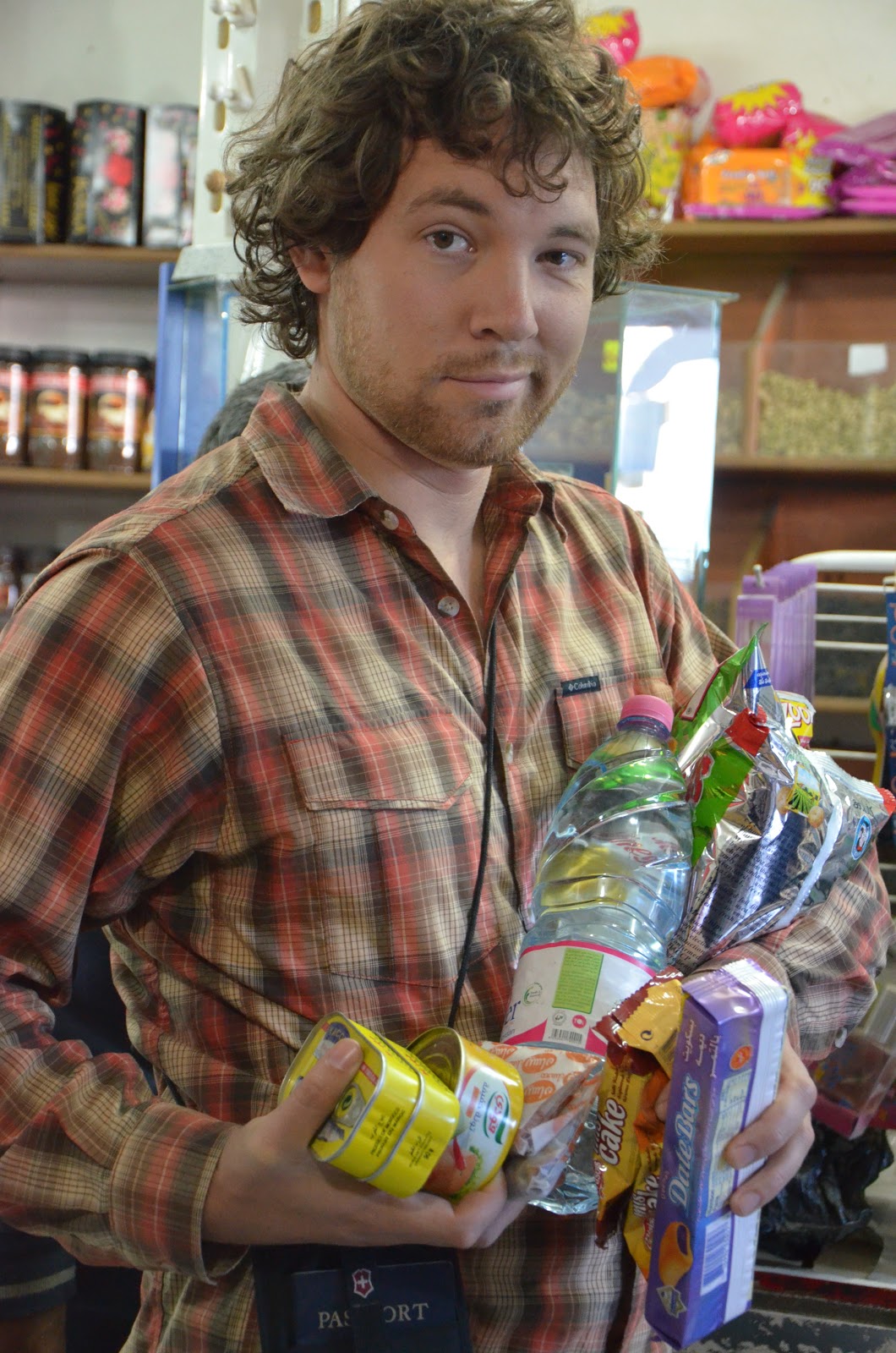
Within minutes of our arrival in Jordan we realized our new tour guide was going to be great.  We had horrible experiences with our guides in Egypt so we were relieved to see that our new tour guide was kind and attentive to our tour group.  During the bus trip he stopped at a store, similar to an American mini-mart, and let us shop for snacks since he knew there was no food available until we reached our hotel for dinner.  It was fun to see the mini-mart, the stuff they sell, and meet some local people on our adventure to the hotel.  


Rob at the mini-mart

Jason found some treasures!
The Taybet Zaman is the hotel we stayed at near Petra.  The deluxe hotel was created out of an old restored Bedouin village.  It sat high on a hill overlooking the desert.  When we arrived it was cold and the wind was howling which gave it a spooking yet fascinating feel.  I loved staying at this hotel because it was unlike any place I’d ever stayed.  The rooms were really nice and the hotel was very close to Petra.  We had the option to go on a night visit to Petra but we passed to save money and stay at the hotel for dinner.  If I had it to do over I’d go on the night visit to Petra.  I’ve seen pictures and it looks amazing at night, probably worth the extra cash.  


View from the hotel

After dinner we all took it easy and went to bed.

Saturday, December 22, 2012

Aswan Dam - December 2010


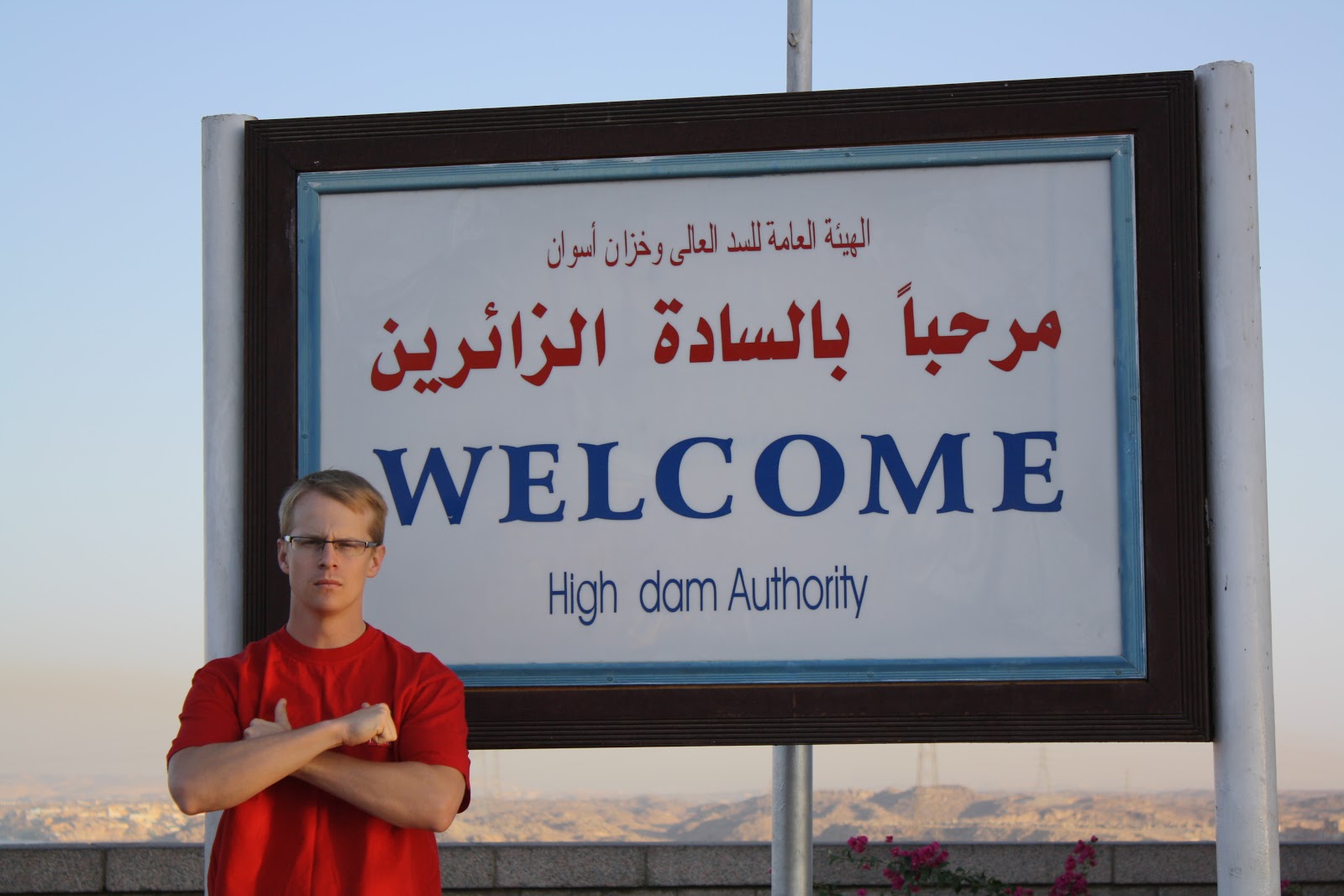
This was another strange part of the trip where we weren’t sure what to think of our tour guide.  She took us to Aswan Dam to take pictures and be tourists but there were signs everywhere that said no pictures.  After a few minutes of us taking pictures guards came and yelled at the group.  Another great moment brought to you by our awful tour guide (who was fired after this trip due to several huge problems).  

The Aswan Dam was built between 1898 and 1902 to provide power and control the flow of water enabling Egypt to increase agriculture output.  The first dam proved to be too small and was unable to handle the Nile and its unpredictable flooding.  The solution was to construct the High Dam between 1960 and 1971, which created Lake Nasser.   
Lake Nasser, Egypt looks just like Pyramid Lake, Nevada, USA
The new dam has increased agriculture production and the hydroelectricity has greatly benefited Egypt.  There have also been some consequences though.  The dam flooded many areas that had ancient monuments.  The change in water flow also changed the way silt moved and was deposited on river bank farmland.  Since the silt now stays in Lake Nasser and is no longer deposited on the Delta, the farmers there have to use chemicals rather than the old silt deposits for farming. 

After seeing Aswan Dam we went to a granite quarry.  At the granite quarry we were able to see a huge cracked obelisk that showed how the stone was carved out of the rock.  

Aswan Airport
 After that part of the trip we went back to Aswan airport for a short flight back to Cairo. 

Aswan, Abu Simbel and my first felucca ride - December 2010


Abu Simbel – Great Temple of Ramses II


First thing in the morning Ron, Chris and I went with a few others from the tour group to the airport to catch a small plane ride to Abu Simbel. 


Abu Simbel (spelled both Simbel and Simbil) is a modern ancient marvel made out of an ancient monument.  The temples are located in southern Egypt on the bank of Lake Nasser.  There are two temples that were originally carved in a mountainside during the reign of Pharaoh Ramses II dedicated to him and his queen Nefertari.  The modern marvel part of this temple is that it was originally located in an area that was to be submerged after the creation of Lake Nasser due to the Aswan High Dam.  The temple was moved from the mountainside in 1968 to its current location on an artificial hill high above the Lake Nasser reservoir. 

You can only take pictures in the entrance way if you hold the key of life and pose.
This was an extra excursion that we added on to the trip and it was well worth the time and money to see this amazing temple and learn about what it took to save it when the dam was built. 


Philae Temple


After returning from Abu Simbel we joined the group for a tour of the Philae Temple, the holiest site for Isis worshippers.  The temple was half submerged after the Aswan Dam was built.  It was completely dismantled and then rebuilt on the island of Agilika.  When touring the temple we saw some very old graffiti, the tour guide said Napoleon did the graffiti but who knows if that is true.   


Aswan


Location "A" is Abu Simbel on this Google Map
Located at the ancient trade crossroads of India, Egypt and Africa you will find the southernmost Egyptian city Aswan.   This is also the place where I finally found a pharmacy and bought myself some Cipro antibiotics over the counter.  After asking my tour guide and the cruise ship staff several times to help me get antibiotics I decided to take things into my own hands and find a pharmacy.  The antibiotics I bought worked and every day I felt a little better. 


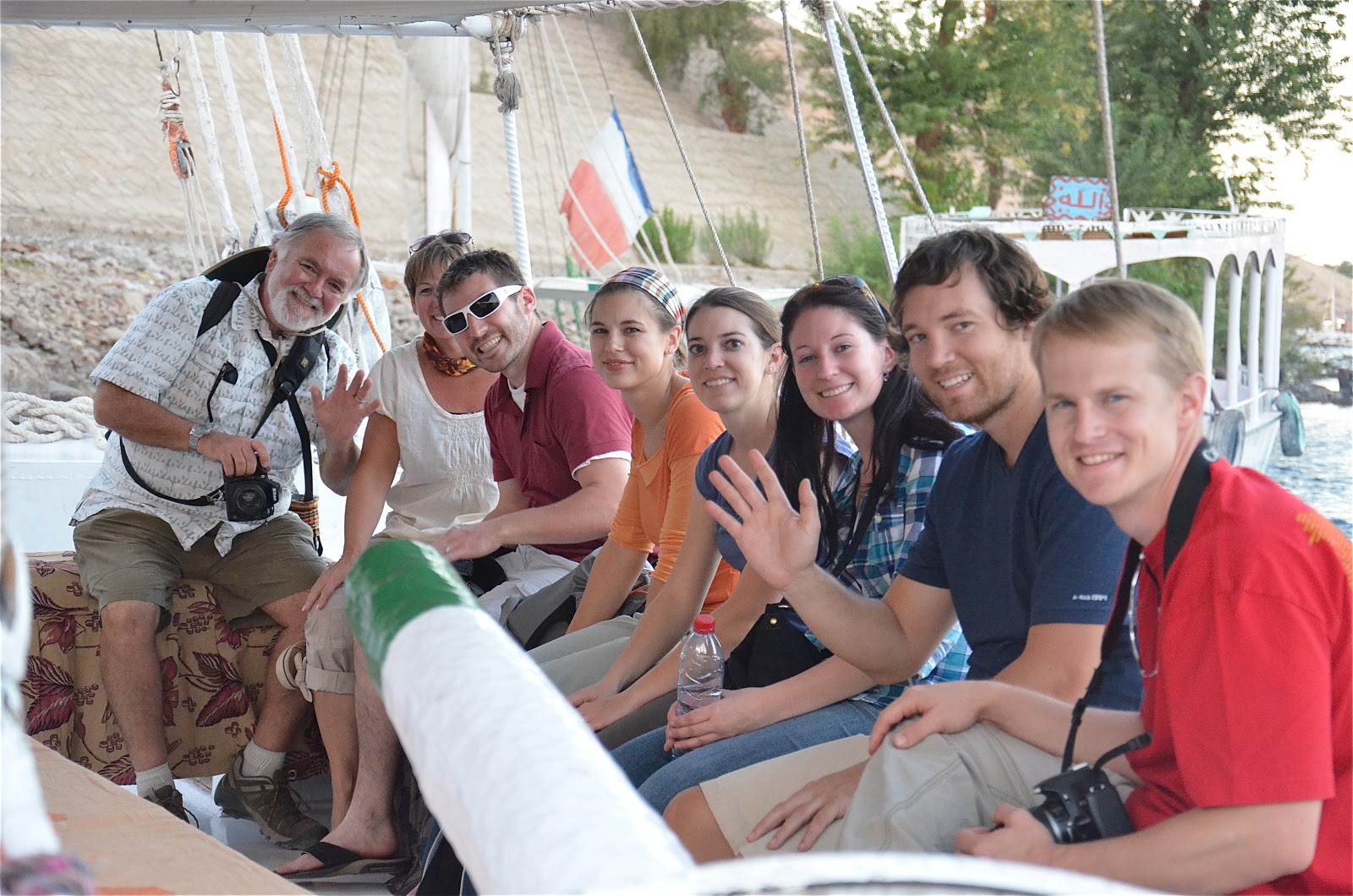
Aswan can best be described as the place where the desert meets the Nile.  We were fortunate enough to take a felucca (a small Egyptian sailboat) ride over to Kitchener’s Island to see the lush botanical gardens.  The felucca ride was fun.  Our security guard was teaching us about the area and the boat captain was entertaining.  This was one of those times on the trip where we realized these guys were way better than our tour guide and we weren’t sure if anything she had told us on the trip was true.   

"Can you hear me now?"  Yes, our Nubian Felucca captain is on his cell phone.

Our security guard / tour guide for the afternoon and the boat captain


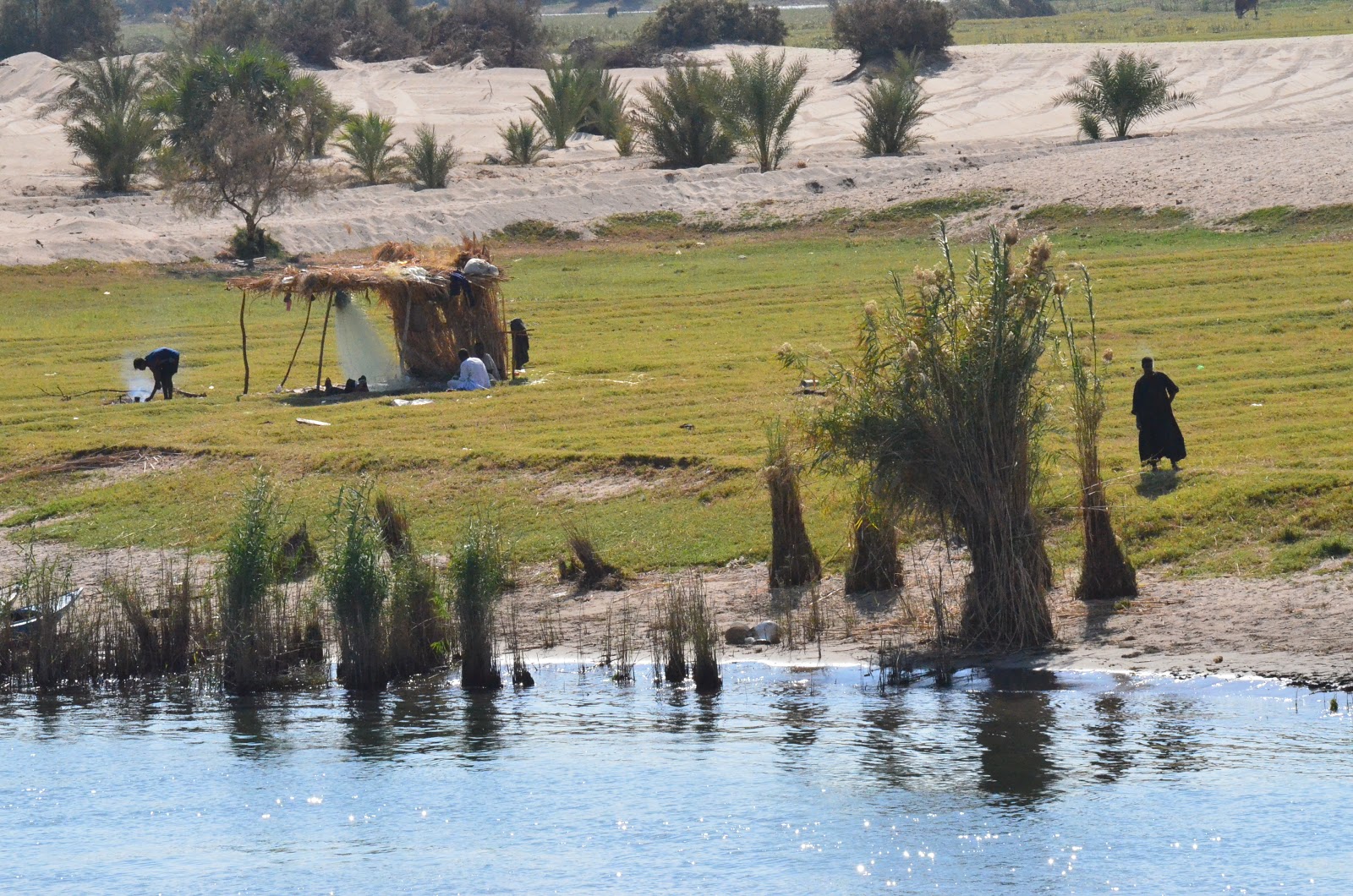
Our walk around the gardens was lovely.  It was interesting to see all the cats and dogs that live on the island in the beauty of all the plants.  They are pretty lucky to have such a spectacular view.  The gardens were unique because on the other side of the river bank was the desert and miles of sand. 


When the felucca brought us back to Aswan we got back on the bus and returned to our Nile cruise ship.  It was the last night on the boat…thank goodness!

Esna & Edfu – December 2010


Esna – The Temple of Khnum

On this leg of the journey we were able to view rural life in Egypt.  Rural life in Egypt is interesting because very little has changed in 4,000 years yet you still see signs of modern life in the villages and towns.  In the town of Esna, located on the western bank of the Nile, we were able to see farmers bring their goods to town on horse and cart buggies.  It was remarkable how these farmers traveled on the same roads as the big tourist buses.  While in Esna we visited the Temple of Khnum, a Greco-Roman structure.  Over thousands of years this area was buried with silt and mud from Nile flooding.  The modern town of Esna was built on top of these ruins.  They began excavating the area in the 1860s.  So far they have only cleared one part of the temple and it is still a work in progress.  


Edfu – The Temple of Horus
This is the temple where Horus, the falcon god, fought a battle with his uncle Seth after he murdered Osiris, Horus’s father.  

On this day of the trip I got really sick.  I had been feeling sick for a few days and it was getting worse.  I could feel a respiratory infection developing.  At breakfast my friends traveling with me all offered me medicine from their traveling emergency kits to make me feel better.  I ended up trying zinc tablets first in the form of some zinc cough drops.  Then about an hour later my friends offered me some antibiotics.  I knew it was getting bad so I took the antibiotics and then I was out the door on the way to my next adventure at The Temple of Horus.  

As we stood listening to our tour guide’s lesson about the temple I started to feel very sick.  I was nauseous and my mouth was watering terribly.  I was starting to panic.  How could I be sick here?  My skin started to hurt and I could feel the fever, which made me feel worse since it was already very warm out.  Finally I couldn’t hold it anymore and I went and vomited in the corner of temple grounds.  I was mortified!!!  I looked around and no one saw that I was sick, I had wandered to a spot where the group couldn’t see me.  I watered down the area with my bottled water and I went back to the group.  When I walked back to the group I saw my friend Bridget staring at me.  I thought for sure she knew and I was really embarrassed.  I drank a lot of water as I stood there listening to my tour guide and my stomach started to feel better, but I still felt like I had a horrible respiratory infection and I was weak.  When we entered the temple there was an area you could sit and wait.  So I sat while the group continued on.  When my friends came back they were surprised I hadn’t gone on the tour because they didn’t know I was sick.  Then I felt even more embarrassed because I had to tell them how I’ve joined the club of horrible American tourists who act inappropriately while visiting foreign lands, yep I upchucked at a sacred ancient temple.  Bucket list – check.
We all joked after the tour that I was so sick I was turning blue.0
My hands were just blue from some paper I was holding.


After the tour was done we took a break and returned to the Nile cruise ship, or the ship of death as I thought of it.  I felt like the boat was trying to kill me, with the tainted food, bad air, and dirty water everywhere I looked I thought for sure the boat would be the end of me.  I still wasn’t feeling well so I took the afternoon off from touring to nap and spend quiet time in my room.  While in my room I used my iPhone to Google the antibiotic I took that morning as well as my symptoms to see if I could figure out how to medicate myself.  I found out the reason I was so sick was because I was having a reaction between the zinc, the antibiotic and all the orange juice I had drank that morning.  Turns out the acid is a big problem when mixing those ingredients and that is what made me sick at the temple.  So I decided to get some rest and if I felt sick the next day I would ask the tour guide to take me to a pharmacy or call a doctor so I could get some antibiotics.

Sunday, October 21, 2012

Hatshepsut's Mortuary Temple – December 2010


Located on the west bank of the Nile, across from Luxor we discovered Deir El Bahari mortuary temple of Queen Hatshepsut.  The temple is partly built out of the rock wall and partly free standing.  It is built into a Limestone cliff which adds to the dramatic look of the landscape.

The temple was cut into the cliff so it is very impressive.  The main focal point is the Deir El Bahari mortuary temple of Hatshepsut.  As you walk up the ramp towards the pillars of the temple you feel smaller and smaller and realize what an architectural masterpiece you’ve discovered. I can’t imagine how impressive it was in 2050 B.C. when it had gardens and lived in all its glory.  These days the rebuilt statues are there but most of the originals have gone missing.  After the pharaoh died several parts of the monument were destroyed including a statue of Osiris, the sphinx avenue that was in front of the monument, and figures of Hatshepsut were all destroyed.

As I walked around exploring the mortuary temple I felt a little spooked like something bad had happened there. It was the weirdest thing because I don’t usually get spooked like that. I just had a weird feeling and an uneasiness about the place.

Osiris statues of Hatshepsut show her
posing as a man wearing a beard

After our tour we sat in the cafĂ© at the base of the temple and had ice cream and drinks. One of the other guys in our group asked me if I was familiar with the Luxor Massacre.  I had no idea what he was talking about.  He said that there was a terrorist attack at the site in the 90s. It tripped me out a bit because I could imagine what that was like and it gave me visions in my mind and goose bumps on my arms. My curiosity got hold of me so when we returned to the boat I had some time to myself so I Googled Luxor Massacre on my iPhone. 

I learned that back in 1997 on November 17th there was a terrorist attack at the site we visited.  63 people were killed by Islamist terrorists.  Four Egyptians were killed (3 police officers and a tour guide), 36 Swiss nationals, 10 Japanese, 6 from Britain, 4 from Germany, 1 French, and 2 people from Colombia were also murdered.   There were six assailants armed with automatic weapons and knives.  They were dressed as members of the security forces and were in disguise.  According to witnesses the tourists were trapped inside the temple and the terrorists attacked for 45 minutes killing as many people as possible.  The attack was gruesome and included the assailants using machetes to mutilate the victims, especially women.  It was so gruesome they found a note praising Islam inside one of the butchered bodies.  After the attack the assailants hijacked a bus and then crashed into a checkpoint during a shootout with police.  One terrorist was killed at the checkpoint while the others fled into the mountainside.  Their bodies were found later in a cave after they all committed suicide together.     

The terrorist attack hurt Egyptian tourism for years and was still felt in 2010 when I visited because other tourists were discussing the attack and aware of the danger when we were chatting in the cafe. The terrorists were anti-government and wanted the attack to devastate the economy and provoke the government. The attack did the opposite and caused an internal rift among the militants and resulted in a ceasefire. It also turned the Egyptian public opinion against the terrorists. The local people protested against the group. The leader of Islamic Group claimed they only meant to take the tourists hostage not murder them. Others denied Islamists had anything to do with the attack and some people even blamed Israelis and Egyptian Police for the attack.
 
It was interesting visiting a place with so much history and not realizing that some of the notorious events were so recent. Hatshepsut’s Mortuary Temple was a beautiful sight but it had a creepy feeling to me when I visited. I think it is worth knowing the ancient and modern history because it helped me explain the uneasiness I felt when visiting.  

Holy Cow Hator